
 Cart is empty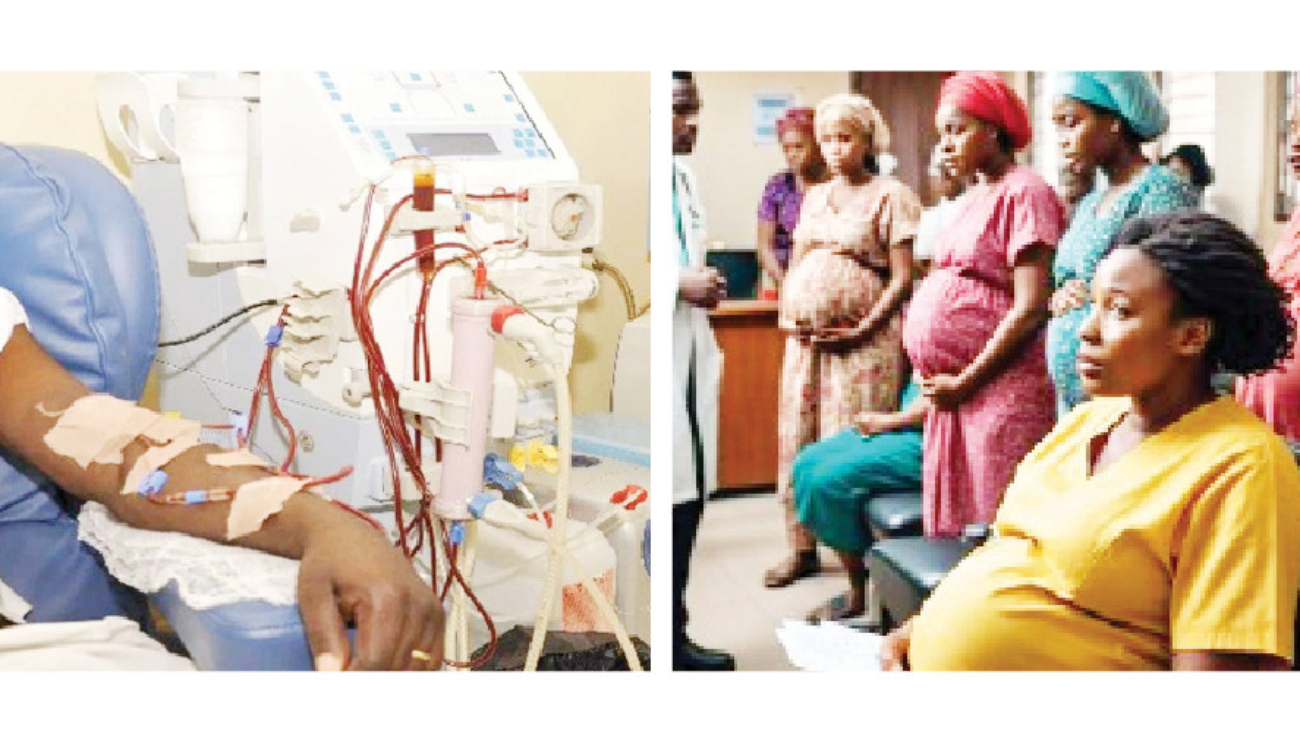
Across Nigeria, recurring industrial strikes by doctors, nurses, and other health professionals have become a painful routine in the public health sector.
While the disputes often centre on salaries, hazard allowances, and poor working conditions, the fallout is borne disproportionately by women and children, who make up the bulk of patients in government hospitals.
For many low-income families, public facilities are not a choice but the only option. Pregnant women are among the hardest hit. Antenatal clinics are suspended, scheduled caesarean sections postponed, and labour wards operate skeletal services, if there are any at all.
Midwives recount cases of women forced to deliver at home or with unskilled birth attendants, increasing the risk of maternal deaths and birth complications. In rural communities, where distances to alternative facilities are long, delays can be fatal.
Children, especially those under five, face equally grave risks. Immunisation programmes are disrupted, routine check-ups missed, and treatment for malaria, pneumonia, and diarrhoea delayed.
Health experts warn that even short interruptions in care can reverse gains made in child survival, exposing children to preventable illnesses and long-term complications. Beyond physical health, the emotional toll on families is immense. Mothers describe anxiety, guilt, and fear as they watch their children suffer without access to care.
Some are forced to sell belongings or borrow at high interest rates to afford private hospitals, pushing already struggling households deeper into poverty while others simply endure the wait, hoping the strike will be called off before it is too late.
Health workers, however, argue that strike action is a last resort. Many point to dilapidated facilities, staff shortages, unpaid allowances, and unsafe working environments as reasons for industrial action.
The death of Jennifer, popularly known as Jenny in Tatagyiya village under the Gyadna community, is a grim reminder of how fragile access to healthcare has become for many Nigerian women, especially during periods of disruption in the public health system.
Her death, following complications after childbirth, underscores not only the absence of basic health facilities in rural communities but also how women and children bear the brunt when healthcare services are unavailable or overstretched.
According to residents, Jennifer delivered her baby at home with the help of a midwife because Tatagyiya village has no functional health centre or maternity facility.
Like many pregnant women in the community, she had little choice as she had to rely on home delivery or undertake a long, risky journey to a distant hospital. Although she appeared stable after childbirth, hours later, she began to bleed heavily, a known and treatable emergency if prompt medical care is available.
Efforts to rush her to a hospital outside the community were delayed, and by the time help came, Jennifer was confirmed dead. Residents insisted that her life could have been saved if a nearby public health facility was available and adequately staffed.
Speaking with Abdul, a Tatagyiya resident, he said, “If there was a clinic here, she would have been taken for treatment immediately,” he lamented. “Instead, we lost her.”
Jennifer’s death has also sparked tension in the community. Eyewitnesses said police officers stormed Tatagyiya around 1 a.m., arresting several residents, including people who were not directly involved in the delivery. The midwife who assisted Jennifer said to also work in a public hospital was among those arrested.
Community members described the arrests as indiscriminate, alleging that money was seized during the operation, further deepening anger and fear among residents.
Incident reflects a broader national crisis
While the incident is rooted in the lack of a local health facility, it reflects a broader national crisis worsened by recurring health workers’ strikes in public hospitals. When strikes shut down services or
Cont’d on page 33
reduce them to skeletal operations, rural and low-income communities are left with no safety net.
Pregnant women, nursing mothers, and children who depend mostly on public healthcare are forced into unsafe alternatives, including home births and delayed treatment. Health experts warn that maternal deaths from post-partum bleeding, like Jennifer’s case, are largely preventable with timely medical intervention.
Yet, strikes, staff shortages, and poor infrastructure mean many public hospitals are either inaccessible or unable to respond to emergencies. Children, too, suffer as routine immunisations, malaria treatment, and emergency care are disrupted.
Beyond police involvement…
As of the time of filing this report, the police had yet to issue an official statement on Jennifer’s death or the arrests. But for residents of Tatagyiya, the questions go beyond policing. They ask why a community can exist without a basic clinic, why women must give birth at home, and why the failure of the health system continues to claim lives.
Pregnant women, children most affected during strikes – JOHESU
In a telephone interview, the spokesperson of the Joint Health Sector Unions, (JOHESU), Martin Luther, said women and children, particularly pregnant women, are the most affected by health workers’ strikes, especially those requiring emergency medical care.
According to him, when essential services are disrupted, they face the greatest risk of complications and preventable deaths. Illness does not discriminate, as anyone can fall sick at any time. It is therefore deeply unfortunate that healthcare disruptions continue to occur, exposing vulnerable populations to avoidable dangers.
Luther explained the full impact of such strikes on maternal mortality is often difficult to measure immediately. However, the consequences become evident over time through increased complications during pregnancy, childbirth, and the postnatal period.
The JOHESU spokesperson noted that children are also severely affected, as disruptions in healthcare contribute to higher child mortality rates. Their developing bodies require regular medical attention, which becomes inaccessible during prolonged industrial actions.
Role of investigative journalism
These are critical areas where investigative journalism can play an important role by examining available data and highlighting trends in maternal and child mortality linked to healthcare disruptions.
He said: “Regardless of differing opinions, healthcare strikes take a heavy toll on citizens, particularly those who rely solely on public hospitals. Many Nigerians cannot afford private healthcare or treatment abroad, leaving them with limited options.
“The media also has a role to play in terms of investigative report. ”
Comparatively, he said the impact of healthcare disruptions is more severe in maternal and child health than in other areas of medical care. This underscores the need for urgent attention to these vulnerable groups.
“Women face multiple biological and reproductive health challenges, while children, due to their developmental stage, are more susceptible to illness. These factors explain why they are disproportionately affected when healthcare services are inadequate.
“Responsible nations prioritise maternal and child health, a principle reflected in Sustainable Development Goals 2 and 3, which emphasise good health, well-being, and universal access to healthcare,” he said.
Meanwhile, the healthcare sector remains strained as resident doctors resume their previously suspended strike, while JOHESU strike continues. Although court injunctions apply only to resident doctors, the ongoing industrial actions continue to place women and children at increased risk, he explained.
“No work, no pay” rule applies – FG
In an effort to curb the impact of repeated industrial actions on Nigeria’s fragile public health system, the federal government enforced a “no work, no pay” policy for health workers, including resident doctors.
Under this directive, salaries for federal hospital staff participating in strike actions are suspended for the duration of the walkouts, reflecting the government’s stance that pay should be commensurate with work performed.
Hospital authorities were tasked with strictly implementing this policy in order to minimise disruptions to essential services while attempting to discourage prolonged labour stoppages.
A circular from the Federal Ministry of Health and Social Welfare, signed by the Director of Hospital Services on behalf of the Coordinating Minister of Health, Muhammad Ali Pate, instructed chief medical directors and medical directors across federal hospitals to enact the “no work, no pay” rule.
While the most recent actions focused on the strike by the JOHESU, the policy and directive extend to other health staff, including resident doctors, who engage in industrial action.
The federal government has said this measure aims to discourage prolonged strikes that disrupt essential public health services and to protect hospital operations by ensuring continuity of emergency and critical services like maternal mortality and child mortality.
Officials argue that enforcing no pay for days not worked aligns with existing labour provisions and acts as a deterrent against frequent industrial stoppages in the health sector.
NARD reacts
The Nigerian Association of Resident Doctors (NARD) was prepared for the enforcement of the no work, no pay stance as part of ongoing tensions with the government over unmet welfare and working condition demands.
Resident doctors faced the possibility of having salaries withheld during strike periods, adding financial pressure to the already significant strain on healthcare delivery caused by prolonged industrial action.