 Cart is empty
The Nigeria Customs Service says it will replace its seven percent collection fees from the federation account and one percent comprehensive import supervision scheme (CISS) with a 4 percent free on board (FOB) levy at the port.
The one percent CISS is a pre-shipment inspection fee, while the four percent FOB is a charge based on the value of imported goods, including transportation costs up to the loading port.
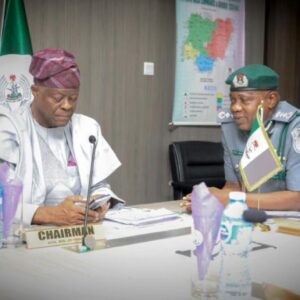
Adewale Adeniyi, the comptroller general of the service, spoke at a town hall meeting with stakeholders on the B’Odogwu clearance system in Lagos.
The high-level engagement, held in Ikeja, brought together importers, freight forwarders, shipping lines, terminal operators, banks and other financial institutions (OFI), and other critical stakeholders to discuss reforms aimed at improving trade compliance, clearance efficiency, and technological modernization.
On February 4, the NCS announced plans to implement a four percent charge on the FOB value of imports.
However, this plan was later suspended to allow for comprehensive stakeholder engagement and consultations regarding the implementation framework.
According to Adeniyi, the customs will use the four percent FOB levy to address concerns about the simultaneous collection of the 1 percent CISS fees and the seven percent customs collection fee from the federation account.
Advertisement
He told the stakeholders that there would be no extra charges after the 4 percent FOB as this would replace the 1 percent CISS and the seven percent they are collecting from the federation account.
The CGC said with the indigenously developed trade platform, the NCS had no choice but to re-introduce the levy to enhance its operational efficiency and fund the technology and modernisation programme of the service.
“The Unified Customs Management System (UCMS), popularly known as B’Odogwu, is a fully digital platform designed to streamline customs operations, eliminate bottlenecks, and promote transparency in Nigeria’s import and export systems,” Adeniyi said.
He also said that as the service is gradually migrating from the NICIS II platform to an indigenous trade platform, the new platform requires a lot of money to fund it to an international standard.
The CGS said aside from funding such technological evolution which requires a lot of money, the service has also invested heavily in the process.
Adeniyi, however, sought the support and understanding of stakeholders, saying that the introduction of the four percent FOB is inevitable if Nigeria is to enjoy the dividends of the new technological innovation as done in other countries.
“We have no choice in the payment of the four percent FOB because it is needed by the Customs to fund the huge technology and modernisation programme it has embarked upon,” he said.
“When we introduced this levy some months ago, we were asked to hold on and consult with our stakeholders.